
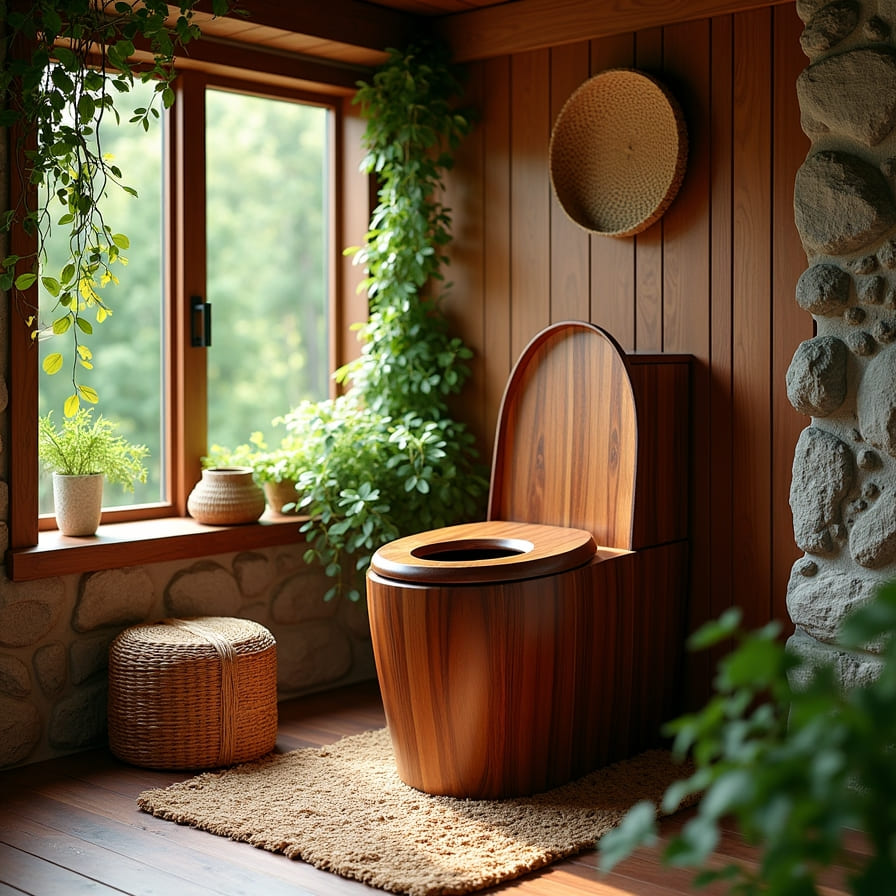
Composting Toilet Off Grid: How To Use Them
Living off-grid in a tiny home means rethinking many modern conveniences and the bathroom is no exception. If you’re looking to ditch septic systems and stay eco-friendly, the composting toilet is one of the most practical, hygienic, and low-maintenance solutions for off-grid waste management.
But how exactly does a composting toilet work? Is it safe? Smelly? Complicated? Let’s break it all down.
What Is a Composting Toilet?
A composting toilet is a waterless toilet system that naturally decomposes human waste into compost using aerobic bacteria, carbon material (like sawdust), and ventilation. Instead of flushing with water, you “flush” with a scoop of cover material usually sawdust, peat moss, or coconut coir.
Over time, the waste breaks down into nutrient-rich humus, much like your backyard compost pile.
Why Composting Toilets Are Ideal for Off-Grid Tiny Homes
- 💧 No Water Required – Saves gallons per day
- 🚫 No Septic System Needed – Skip expensive digging and permits
- 🌱 Eco-Friendly – Turns waste into usable compost (in legal areas)
- 💰 Budget-Friendly – DIY options under $100, premium systems around $1,000
Types of Composting Toilets
1. Self-Contained Units
Everything stays in one unit. Often includes a urine diverter and a fan.
Popular Models: Nature’s Head, Separett, Sun-Mar
2. DIY Bucket System
A 5-gallon bucket with a toilet seat and sawdust. Low-tech but effective.
Cost: $30–$100
3. Centralized Systems
Waste is diverted to an external composting chamber, ideal for families or high use.
How to Use a Composting Toilet (Step by Step)
✅ Step 1: Prep the Container
Make sure the solids container is lined (if desired) and a supply of dry carbon material (like sawdust) is nearby.
✅ Step 2: Do Your Business
Sit and use it just like a normal toilet. Composting toilets usually separate urine and solids, so aim accordingly (or let the diverter do its job).
✅ Step 3: Cover It
After each solid use, toss in a scoop of sawdust or peat moss. This keeps things dry, controls odor, and starts the composting process.
✅ Step 4: Empty Regularly
- Solids: Every 2–4 weeks for one person. Dispose in an outdoor compost pile (check local laws) or bag and toss if required.
- Urine: Empty the container every 1–3 days. Dilute and use in gardens, or dispose responsibly.
✅ Step 5: Maintain Airflow
Use a vent pipe or small fan (many units include these) to help remove moisture and keep odors at bay.
Odor Control Tips
- Use plenty of dry cover material.
- Keep the toilet well-ventilated.
- Empty urine container frequently.
- Clean the urine diverter weekly.
Good news: A properly maintained composting toilet should not smell at all.
Is It Legal to Use a Composting Toilet?
Yes, in many off-grid and rural areas. However, some counties require a backup system or regulated composting. Always check your local regulations.
Composting Toilet Maintenance Checklist
- ✅ Add carbon material after every use
- ✅ Keep containers dry
- ✅ Empty solids and urine containers on schedule
- ✅ Wipe down diverter and seat regularly
- ✅ Inspect for bugs or leaks
- ✅ Check vent fan (if electric)
Final Thoughts
A composting toilet may seem strange at first, but most off-grid tiny home dwellers quickly adjust—and often prefer it to traditional plumbing. It’s clean, low-cost, and supports a self-sufficient lifestyle with minimal impact.
Whether you choose a commercial system or go the DIY bucket route, a composting toilet is a smart, sustainable way to manage waste in your tiny home—no plumbing, no problem.